
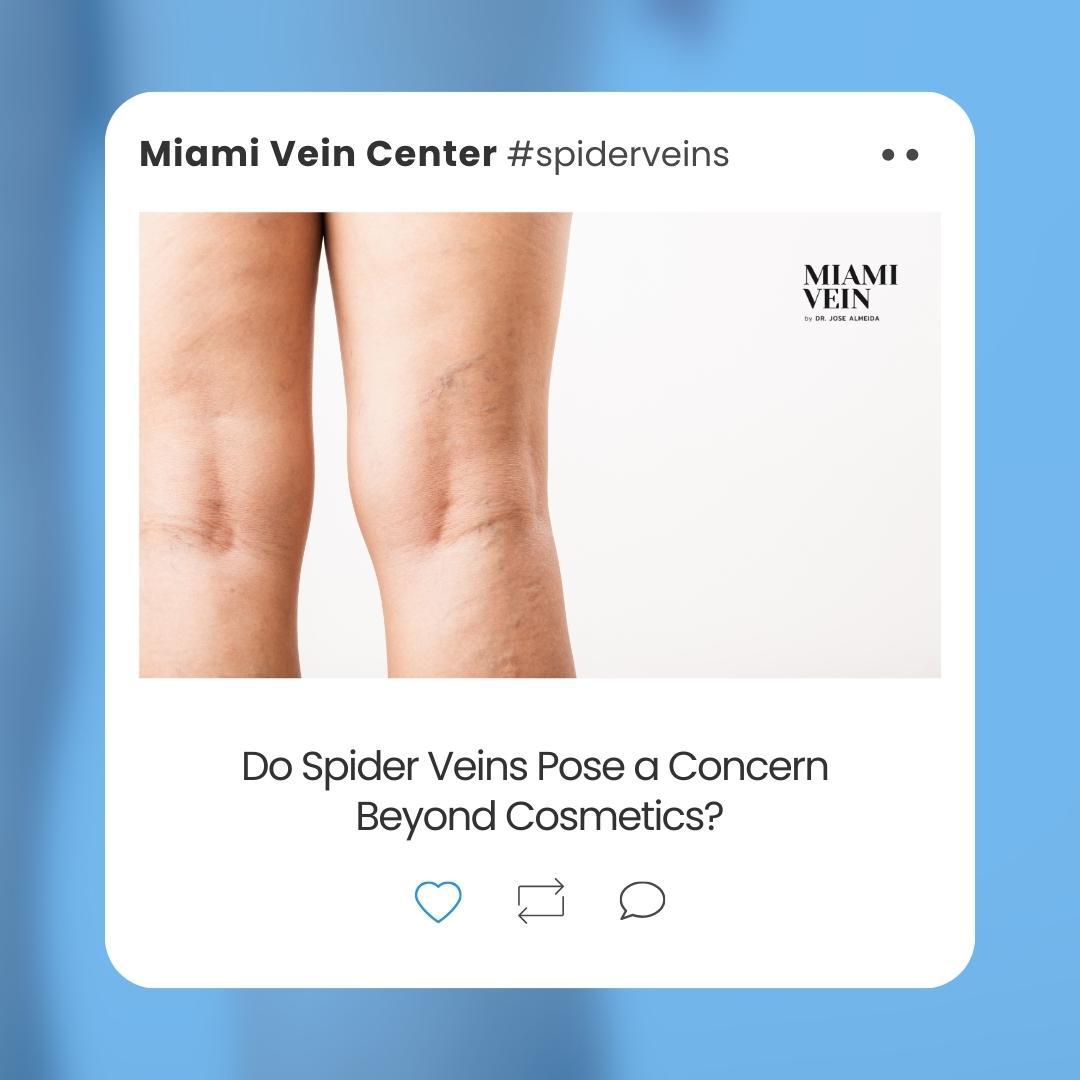
Spider veins, recognizable as tiny red or blue web-like patterns on the skin, might seem like a mere aesthetic concern. However, they can occasionally hint at underlying vascular problems.
Many people get spider veins. They're usually not something to worry about right away, but if you don't pay attention to them, they could lead to problems. In this article, we'll talk about what spider veins are, their symptoms, and why it's important to get them checked out. We'll also look at what can happen if they're not treated and how Dr. Jose Almeida at the Miami Vein Center in the Miami Brickell area, FL, can help.
Common Signs of Spider Veins
- Itching or burning near the veins.
- A throbbing feeling or cramps in their legs.
- Restless legs, especially at night.
- Swelling or redness around the veins.
- Skin getting darker near the veins.
Why Spider Veins Shouldn't Be Ignored
Spider Veins vs Varicose Veins - Which is only a cosmetic concern?
Spider veins and varicose veins are types of vascular issues, but they are not the same thing. While they are both types of venous disorders, they have some notable differences:
- Spider Veins: These small veins visible beneath the skin may remind one of a spider's web or tree branches. Typically found on the face and legs, spider veins usually measure less than 1 millimeter in diameter. They're primarily an aesthetic issue, seldom causing physical symptoms.
- Varicose Veins: These are larger, bulging veins often resembling twisted ropes and measuring over 3 millimeters in diameter. They usually sport a blue or dark purple hue, most commonly found on the back of the calves or inner legs. In contrast to spider veins, varicose veins can cause symptoms like pain, swelling, and itching.
Who's at Risk for Spider Veins?
Anyone can develop spider veins. However, some people are more prone to getting spider veins than others. Some of the factors that increase the risk of spider veins include:
Age: Older individuals are at a higher risk.
Genetics: A familial history of venous problems can increase susceptibility.
Hormonal Changes: Life phases like pregnancy and menopause, or even birth control use, can play a role.
Lifestyle: Extended periods of sitting or standing can put undue stress on veins.
Sun Exposure: Excessive sun can induce spider veins, especially on the face.
What Could Happen If You Don't Treat Spider Veins
It’s essential to note that while spider veins are often removed for cosmetic reasons, spider veins are an indicator of an underlying medical condition. Most spider veins are asymptomatic, but can be an early warning sign for condition such as:
- Varicose Veins: These are bigger, twisted veins that can hurt.
- Venous Ulcers: Painful sores, usually near the ankles, that don't heal easily.
- Deep Vein Thrombosis (DVT): A dangerous blood clot deep in your veins.
- Superficial Thrombophlebitis: A clot in your surface veins, causing inflammation.
These problems can be really uncomfortable and, especially with DVT, can be dangerous.
Treatment Options at Miami Vein Center
While spider veins can appear unsightly and uncomfortable, they can be treated. For those seeking treatment for spider veins, the Miami Vein Center, led by Dr. Jose Almeida, offers state-of-the-art solutions:
Conventional Sclerotherapy: A specialized solution is injected to make the vein collapse and fade.
Foam Sclerotherapy: This approach employs a foam solution suitable for treating larger veins.
Ultrasound-Guided Sclerotherapy: Through ultrasound imagery, this method offers precision in locating and treating the veins.
Consult Dr. Jose Almeida at Miami Vein Center
While spider veins may initially present as a cosmetic issue, they can sometimes signify deeper vascular problems. Dr. Jose Almeida, an esteemed vein specialist, and vascular surgeon at the Miami Vein Center located in the Miami Brickell area, offers years of experience and advanced treatment options tailored to each patient's needs.
If you have concerns about spider veins or any other vascular matters, contact the Miami Vein Center. Prioritize your health and confidence by seeking expert advice and effective treatments.